
Last Updated on March 2, 2026 by Jim Benson
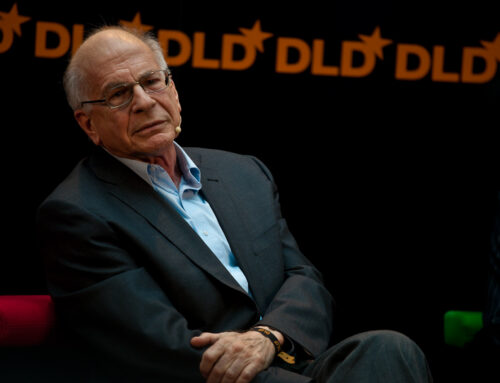
PopTech, CC BY-SA 2.0, via Wikimedia Commons
This is part of the Behavioral Economists series. Start with The Science of Finishing Things on Humane Work.
People want to know they are having an impact. But when I ask people what motivates them at work and they’ll say something about purpose, or recognition, or interesting problems. But these are aspirational, and if aspirational worked we’d all be rail thin and able to lift a Volkswagon.
Dan Ariely has spent his time measuring why people do the things they do. Why we would rationally say “I’m motivated by purpose” because, to an extent we are, but that motivation isn’t sustainable. We need something more tangible.
We need visible progress. (You Can see why this would be relevant to Personal Kanban…)
We are motivated by knowing we are moving forward. We have evidence that our effort is producing results. Small, concrete, observable, rapidly reported proof that work is getting done.
Most productivity systems are aspirational or transactional, but they are rarely systemic. With Personal Kanban we want to make sure we have both the aspirations and goals of our work, the system of our work, and the learning from it all in one place. Ariely’s research tells us that is motivation infrastructure.
The Progress Principle, Ariely’s Footprint, and PK
In 2011, Teresa Amabile and Steven Kramer published The Progress Principle, a landmark study of knowledge workers’ daily inner lives that tracked mood, motivation, and engagement tracked against what workers experienced. They concluded that the single most reliable driver of positive inner work life was making progress on meaningful work, even small progress, even on a single day. Thisis what Tonianne and Jim say in the Personal Kanban book published so many years ago.
The fact that this is stilly surprising is … painful at best. But we see it all the time, people go to work to work. What upsets us all is not being able to work! More than recognition from a manager, a sense of mission, or manufactures incentives…we are setting out to make the right work happen at the right time…which is all anyone (management, customer, worker) wants.
Ariely adds is the mechanism. Ariely did this thing were participants built Lego figures that were immediately disassembled in front of them (and we’ve seen this play out in “real life” in offices many times) showed that when the fruits of effort, the products of our creativity, are erased or made invisible, motivation collapses even when pay and task remain identical. The progress principle isn’t just an observation. It is grounded in something behavioral: humans need evidence that their effort produced something durable.
Your board holds all of this. The aspirations of the options, the system of the doing, the learning and metacognition of the done. When you have a Done column that actively shows you the value of your work, you have daily access to evidence your brain needs to stay engaged with the work.
Making your PK Board’s Done Column Work Harder
We have literally dozens of posts (several at Humane Work) that show ways to design your done columns (areas) to track impact and effort, satisfaction, impact, distractions… There is so much to learn from your work.
You Should Move cards physically (or deliberately). There is something about the act of moving a card to Done that makes completion real in a way that checking a box on a list doesn’t. The card existed in Doing. It crossed the line. It is now in Done. This is a legible event, a closed loop, a moment the progress principle recognizes.
Make it a moment. Don’t just mark it done…move it…become it.
Then Annotate how the work made you feel. Ariely’s research on experience utility found a persistent gap between how we predict work will feel and how it actually does. We’re poor forecasters of our own satisfaction — which means we keep signing up for work that depletes us because we can’t clearly remember that it depleted us before.
The fix is annotation: when a card moves to Done, mark it as energizing, neutral, or draining. An emoji is enough. After a few weeks, patterns emerge that are impossible to see without the data — and those patterns tell you where to invest and where to cut.
Review Done weekly, not just at completion. The weekly Done review makes progress visible in aggregate. You finished seven things this week. The three that moved fastest were all a certain type of work. This review takes five minutes and does exactly what the progress principle describes: it makes the week’s forward movement concrete and visible.
Completion Anxiety and Not Finishing
Ariely identified a phenomenon he called completion anxiety which is a tendency to avoid finishing things because completion triggers judgment. When something is done, it can be evaluated. As long as it’s in progress, it can’t. (Note, when scientists say tendency they mean you do this all the time.)
This explains something you’ve probably observed: tasks that sit in Doing long after they’re essentially complete. The last 10% never gets done. The email gets drafted but not sent. The document gets written but not submitted.
Your board can surface this pattern. If you review your Doing column weekly and notice cards that have been there for two or three cycles without clear reason, you’re probably looking at completion anxiety. Naming it is the first step toward addressing it.
Sometimes the fix is a conversation about quality standards. Sometimes it’s just recognizing that “good enough to finish” is better than “perfect but never done.”
Meaning and Mechanics Are Not Separate
One of Ariely’s consistent findings: meaning and mechanics are not separate. The experience of work — whether it feels meaningful, whether it registers as progress, whether it connects effort to outcome — is shaped by the structure of the work system.
You don’t create meaning through better framing or purpose statements. You create it through systems that make progress visible, completions legible, and effort traceable to outcomes.
That’s what your board does when you use it well.
The Done column is not a graveyard for finished tasks. It is evidence.
Use it like evidence.
For the team motivation dynamics, see What Teams Get Wrong About Progress at Modus Institute. For the leadership perspective on meaning and work design, see Meaning at Work Isn’t a Feeling. It’s a System. at Modus Cooperandi.
Personal Kanban: Mapping Work | Navigating Life is the book that started the movement. If you’re new here, that’s the place to begin.
For weekly essays on work, flow, and being human while getting things done, join us at Humane Work. For courses, workshops, and live events, check the Modus calendar or visit Modus Institute.
Further reading:





Leave A Comment