About Jim and Tonianne
Jim Benson and Tonianne DeMaria help organizations build visual systems where work, communication, and value flow – and people thrive. Together they co-created Personal Kanban and co-founded Modus Institute, bringing systems thinking, Lean, practical psychology, and behavioral economics into concrete practices that reduce overwhelm and improve outcomes at the individual, team, and organizational level.
For nearly two decades, they have consulted, taught, and coached, designing systems, experiments, and habits that make complexity manageable for teams across industries and around the world. They do not separate “process” and “people”; they design systems that work because they’re built for the humans inside them.
Recognized globally as leading voices in Kanban, Obeya, and visual management, they are founding members of Obeya Global and hold the Obeya Sensei designation, the highest level of Obeya expertise. Their bestselling Personal Kanban: Mapping Work | Navigating Life received the Shingo Research and Publication Award, one of Lean’s most respected honors. Their courses at Modus Institute and their work as faculty with the Lean Enterprise Institute have become reference points for people who want to move beyond rigid frameworks toward systems that actually fit their context.
Through Modus Cooperandi, Modus Institute, and with formats such as Lean Coffee and Kaizen Camp™, they’ve partnered with organizations including the World Bank, the United Nations, JP Morgan, The Library Corporation, Progressive, NBCUniversal, Comcast, Spotify, Turner Construction, and Meta to create sustainable humane systems where business performance and human potential advance together.
They also write together at Humane Work, their Substack publication on the psychology and practice of humane visual work. They draw on real experiences to explore how teams reduce toxicity and overload, make expectations and commitments visible, and design systems that people can actually think in and thrive in. Subscribers receive practical breakdowns of real situations, experiments to run with their own teams, and monthly subscriber-only Lean Coffee sessions where they can bring their own questions and contexts to discuss directly with Jim and Toni.
Subscribe to Humane Work
To explore working with Jim and Toni, visit the Services page or contact them here.
Personal Statement from Toni
People should feel their work is valued – that they are valued. Sadly we’ve seen that isn’t always the case.
I began my career as a public historian, helping preserve people’s and communities’ own accounts of their lives so they wouldn’t be erased or supplanted by “official narratives.” The question was always: whose story gets remembered, and whose gets edited out? That same question shows up every day in modern workplaces.
There’s a sticky note attached to my monitor that reminds me why Jim and I do what we do. It’s from a client who once implored, “Please. Help me justify my existence to my boss.” Not a day goes by that I’m not in equal measure haunted and yet driven by this plea. No one should feel their work is invisible. Their contributions are invisible.
That they are invisible.
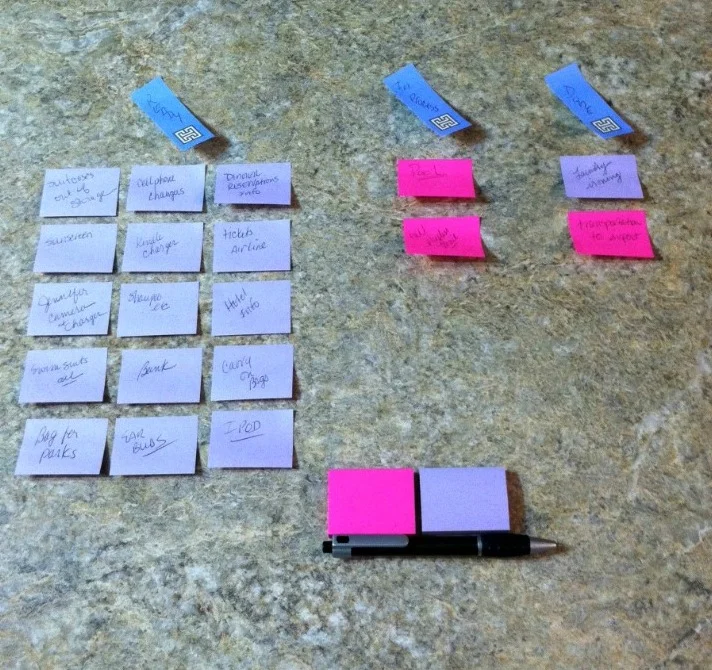
With Personal Kanban, our once-tacit workload – our backlog, our priorities, our capacity, and our effort – becomes explicit. It gives us clarity over our options, feedback from our actions, and unassailable recognition when value is created. Creating workplaces that are more humanistic than mechanistic, where those creating value are valued, is one way to shift the narrative: a virtuous cycle for the employee, the organization and, ultimately, for society as a whole.

Personal Statement from Jim
I’ve spent my career making invisible work visible. As an AIDS activist, urban planner, engineer, and software founder, I kept seeing the same pattern: smart people drowning in systems they didn’t design, working toward goals they didn’t set, unable to see if what they were doing mattered.
Personal Kanban emerged from a simple belief: if you can see your work, you can think about it. If you can think about it, you can change it. If you can change it, you can own it, share it, expand it. Visualize your work and limit your work-in-progress. Your capacity is real, your time is finite, your focus is usually squandered – you can design how you work.
We’ve worked with the largest corporations and with individual solopreneurs. Across the board, people tell us how Personal Kanban gave them back their agency – that they can say no, or, better yet, say yes with confidence. That’s what I’m after: work visible enough to be understood, manageable enough to be done well, on a Kanban or in an Obeya designed by the people doing the work to meet the demands of their work.
Working with Us
Jim and Tonianne do not offer canned programs or off-the-shelf frameworks; every engagement is designed for the specific context, constraints, and outcomes desired by the teams in front of them. This tailoring starts with understanding how work really happens today, then co-creating experiments, practices, and visual systems that fit the reality of the organization instead of fighting it.
Whether the work entails consulting, coaching, or teaching, they design engagements that blend visual management, systems thinking, and human-centered change so clients get both durable structures and the habits and mindsets that keep those structures alive. This combination helps overloaded teams move from chaos to clarity, finish more of the right work, and reduce stress without sacrificing performance.
Their shared approach integrates systems thinking, psychology and neuropsychology, and Lean principles into practical tools like Kanban and Obeya, helping organizations gain shared focus, surface risks earlier, and create sustainable flow. Clients use these systems to become more resilient, align around what matters, and deliver more reliably in complex, changing environments.